With Dolby Vision gaming HDR technology available on Xbox Series X and Series S consoles, some TV owners have noticed that suddenly there’s a new setting to worry over. While some HDMI 2.1-equipped 4K displays could handle 120Hz, and some can support Dolby Vision for gaming, at first there weren’t any that could do both things at once.
Now LG has confirmed it’s the first manufacturer with Dolby Vision HDR at 4K 120Hz support on some of its TVs, just a couple of weeks after owners noticed it arriving in updates. The 03.15.27 firmware enables the feature on C1 and G1 2021 OLED TVs, and today LG says support is on the way for other premium TVs in its 2021 lineup.
Additional premium models in LG’s 2021 TV lineup such as OLED Z1 series, QNED Mini LED QNED99 series and NanoCell NANO99 series TVs will also receive the update in July. Additional 2021 and 2020 TV models are also being tested for Dolby Vision gaming in either 60Hz or 120Hz.
The press release wasn’t specific about support for previous years, but the company has said to Forbes that beta software with 4K/120Hz support is coming to other 4K TVs including last year’s CX and BX models. There’s no word yet on any update for 2019 OLED TVs.
All of this is happening before the first Dolby Vision HDR-enabled games are available, which we believe should help gamers automatically configure their brightness and image settings to match the TV’s capabilities. As the company behind the technology explains, “Dolby Vision games automatically map to your Dolby Vision display as you play, so you’re always seeing the full picture.” Microsoft has said it means you’ll see “brighter highlights, sharper contrast, and more vibrant colors,” although how that applies to other HDR games is harder to tell.
The new firmware also adds Game Dashboard, a floating menu that should help LG owners configure their TVs and see which settings are enabled. It works on any 2021 LG TV with Game Optimizer, and can show the status of the TV’s black stabilizer, low latency and variable refresh rate (VRR), or flip between settings tuned for specific genres. Samsung was first with a game bar feature on its 2021 TVs, but with something this useful we hope more manufacturers pick up the idea.
WASHINGTON — The House on Monday passed two bipartisan bills aimed at bolstering research and development programs in the United States, setting up a battle with the Senate over how best to invest in scientific innovation to strengthen American competitiveness.
The bills are the House’s answer to the sprawling Endless Frontier Act that the Senate overwhelmingly passed this month, which would sink unprecedented federal investments into a slew of emerging technologies in a bid to compete with China. But lawmakers who drafted the House measures took a different approach, calling for a doubling of funding over the next five years for traditional research initiatives at the National Science Foundation and a 7 percent increase for the Energy Department’s Office of Science.
The contrast reflected concerns among House lawmakers that the Senate bill placed an outsize and overly prescriptive focus on developing nascent technologies and on replicating Beijing’s aggressive moves to gain industrial dominance. Instead, the lawmakers argued, the United States should pour more resources into its own proven research and development abilities.
“If we are to remain the world leader in science and technology, we need to act now,” said Representative Eddie Bernice Johnson, Democrat of Texas and the chairwoman of the Science Committee. “But we shouldn’t act rashly. Instead of trying to copy the efforts of our emerging competitors, we should be doubling down on the proven innovation engines we have at the National Science Foundation and the Department of Energy.”
Lawmakers and their aides must try to reconcile the Senate-passed legislation with the two bills passed on Monday, prompting a major debate on Capitol Hill about industrial policy and how to strengthen American competitiveness, a goal with broad bipartisan support.
The two bills passed 345-67 and 351-68.
“One of the core disagreements or tensions between the House and the Senate version is that the Senate version is really focused on China,” said Robert D. Atkinson, the president of the Information Technology and Innovation Foundation. Ms. Johnson’s bills, he added, prioritize “more social policy issues,” including science, technology, engineering and mathematics education and climate change.
President Biden said in a statement on Monday that he was “heartened” by the passage of the House bills and that his administration “looks forward to continuing to work with the House and the Senate in producing a final bill I can sign.”
The House bills omit a number of provisions that are centerpieces of the Senate legislation, including $52 billion in emergency subsidies for semiconductor makers and a slew of trade provisions. Instead of creating regional technology hubs across the country, as the Senate measure would do, one of the House bills would establish a designated directorate for “science and engineering solutions” in the National Science Foundation.
While singling out several emerging technologies, including artificial intelligence and advanced computing, lawmakers on the House Science Committee have mostly focused on research and funding a holistic approach to scientific innovation.
“History teaches that problem-solving can itself drive the innovation that in turn spawns new industries and achieves competitive advantage,” Ms. Johnson wrote.
William A. Reinsch, the Scholl chair in international business at the Center for Strategic and International Studies, said with sections on public health challenges and the STEM work force, the House had taken “a broader definition of how to get our innovation capabilities up and running.”
The Senate legislation, passed by a vote of 68-32, was steered through the chamber by Senator Chuck Schumer, Democrat of New York and the majority leader, a longtime China hawk who has been eager to enact what would be the most significant government intervention in industrial policy in decades. It was powered in large part by bipartisan concern about China’s chokehold on global supply chains, which has grown particularly acute amid shortages brought on by the coronavirus pandemic. Mr. Biden applauded its passage and said that he hoped to sign it into law “as soon as possible.”
It would allocate hundreds of billions more into scientific research and development pipelines in the United States, create grants, and foster agreements between private companies and research universities to encourage breakthroughs in new technology.
As the legislation moved through the chamber, echoing similar concerns from lawmakers on the House Science Committee, senators shifted much of the $100 billion that had been slated for a research and development hub for emerging technologies at the National Science Foundation to basic research, as well as laboratories run by the Energy Department. The amount for cutting-edge research was reduced to $29 billion, with the rest of the original funds funneled toward research and labs.
Those changes may assuage House lawmakers as they seek to reconcile the two bills in the coming months.
A heat wave is engulfing much of the United States this week, and temperatures across the West have soared past 100 degrees Fahrenheit.
It’s another reminder of why President Biden acknowledged the climate crisis as an “existential threat” throughout his campaign, and why it’s remained high on his agenda as president.
But just as the mercury was rising last week, Mr. Biden appeared outside the White House to announce that he had reached a deal with centrist senators on an infrastructure package that would significantly trim what had been his main vehicle for confronting climate change.
The biggest climate-related proposals in the initial bill, the $2 trillion American Jobs Plan, are nowhere to be found in the compromise proposal.
Mr. Biden has said he plans to follow it with another bill, which would focus on care industry workers and other elements of “human infrastructure,” and would be more likely to pass with only Democratic votes. Climate activists are now pinning their hopes to that legislation.
“We in the advocacy community are really focused on the second part of this, which we think is going to be more ambitious and bolder on the climate issues,” Elizabeth Gore, the vice president for political affairs at the Environmental Defense Fund, said in an interview. “We are looking at that as our primary focus for our advocacy.”
But there is no guarantee that the future bill will include the kinds of provisions that advocates say are necessary to containing emissions in the power and transportation sectors. And ultimately, what’s included in that legislation will largely be up to Senator Joe Manchin III of West Virginia, the most conservative Democratic senator — who represents one of the states that are most heavily reliant on the carbon energy industry, and who himself has close ties to it.
It was Mr. Manchin’s insistence on finding bipartisan compromise that scuttled the White House’s hopes of passing the American Jobs Plan through the process of budgetary reconciliation, which would remove the need for Republican votes. Now that Mr. Manchin and a crew of moderate senators have hammered out a compromise on infrastructure, it remains to be seen whether he will support an ambitious, Democrats-only proposal to reel in fossil fuels.
If he did so, it would go against many of the patterns he has established as a legislator.
Mr. Manchin won election to the Senate in 2010, swimming against the tide of West Virginia’s Republican shift, partly thanks to a TV ad in which he shot a bullet into a copy of President Barack Obama’s cap-and-trade proposal.
By then Mr. Manchin had already made millions from his involvement with the coal brokerage firm Enersystems, which he had helped run before entering politics, and which continued to pay him dividends thereafter.
Once in office, he often voted to limit the Environmental Protection Agency’s powers, though — as a reputedly strategic legislator — he rarely cast a deciding vote. As a member of the powerful Senate Energy and Natural Resources Committee, which he now chairs, he has worked to increase energy efficiency in buildings and machinery, while supporting some investment in clean-energy technologies. But he has also emphasized, as he did during a committee hearing this year, that “fossil fuels aren’t going anywhere anytime soon.”
In addition to its longtime reliance on the coal industry, West Virginia now has a congressional delegation that is entirely Republican aside from Mr. Manchin, and the state’s voters are typically steeped in conservative media and talking points. This year, Americans for Prosperity — the political action committee heavily funded by Charles Koch — spent heavily on advertisements urging Mr. Manchin to oppose ending the filibuster. The group also brought protesters to the state capitol in Charleston.
These pressures, as well as his history as an ally of the coal industry and other business interests, help to explain why Mr. Manchin has insisted on bipartisanship. “I think he’s committed to finding solutions in this area, but his path has to reflect his state and constituents and families and communities in West Virginia,” Ms. Gore said.
To that end, in his work on the energy committee, Mr. Manchin has put a heavy emphasis on “emissions reduction through innovation, not elimination,” Collin O’Mara, the president of the National Wildlife Federation, said in an interview.
Mr. O’Mara is in constant communication with Mr. Manchin on energy- and climate-related negotiations, and said that he considered much of Mr. Manchin’s hesitation to be sincerely based in concern for Appalachian workers who had been hit hard by the closing of coal mines across the state.
“It all comes back to West Virginia workers,” Mr. O’Mara said. “Every single question — and where he is on every single policy — can be viewed through that rubric. And he’s dead-serious about not allowing the folks that powered the last century to be left behind.”
What’s in the bipartisan compromise
Mr. Biden entered the presidency promising historic investments in clean energy and green jobs. He committed on Day 1 to rejoining the Paris climate accord. Soon afterward, he pledged to cut the United States’ carbon emissions in half (from 2005 levels) within the next nine years. And when he unveiled his American Jobs Plan, climate advocates hailed its focus on shifting the energy grid away from fossil fuels.
But the compromise proposal unveiled on Thursday, which the White House labeled the Bipartisan Infrastructure Framework, contained just a shadow of the climate-related proposals that were in the American Jobs Plan.
The bipartisan deal would invest over $100 billion in roads, bridges and other major projects; $66 billion in train lines; roughly $50 billion in public transit; and $55 billion for water infrastructure. It would also aim to guarantee broadband internet access to all Americans. Yet few of its provisions would directly fight carbon emissions through alterations to the tax code or by establishing of national standards.
The deal wouldn’t phase out fossil fuel subsidies or institute a federal clean-electricity standard, as the American Jobs Plan had proposed. New tax credits for clean energy and billions of dollars in research funding were also left out of the compromise.
In a statement, a Manchin spokeswoman called the bipartisan deal “a major investment in clean energy and the high-quality jobs that come with it, as well as a pragmatic step forward on the long-term solutions to climate change.” The spokeswoman, Sam Runyon, pointed to the deal’s provisions investing in clean-energy innovation and supply chains.
But this afternoon, climate activists organized by the Sunrise Movement gathered outside the White House to express their dissatisfaction with the compromise bill, and to present a series of demands.
“Passing the bipartisan infrastructure bill on its own is not enough to combat the climate crisis,” J.P. Mejía, one of the organizers, said in a phone interview, taking a pause from the demonstration. “It actually propels us even closer to the crisis that the Biden administration promised to take us away from.”
Mr. O’Mara, of the National Wildlife Federation, said that the Biden administration wouldn’t be able to “get anywhere close” to cutting emissions in half by 2030 without tax credits for clean energy and national clean-electricity standards — elements he said would be crucial as Democrats worked on a follow-up bill.
On to the next bill?
When he announced the bipartisan deal, Mr. Biden said he would refuse to sign the legislation if it weren’t accompanied by another bill, probably passed by Democrats alone.
“If this is the only thing that comes to me, I’m not signing it,” Mr. Biden told reporters. “It’s in tandem.” But he stopped far short of outlining exactly what he expected to be in the second proposal — and discussions of climate change were all but absent from his remarks.
Mr. Biden’s comments drew fire from some of the centrist Republican senators who had agreed to the compromise proposal, and who said they felt blindsided by what they considered an inherent veto threat in the absence of more ambitious, Democrats-only legislation. The White House was left to run damage control.
On Saturday, after more than 24 hours of working the phones to hold on to Republican support, Mr. Biden released a statement acknowledging that his comments had “created the impression that I was issuing a veto threat on the very plan I had just agreed to, which was certainly not my intent.” He urged senators not to condition their support for one bill on the fate of another.
“Our bipartisan agreement does not preclude Republicans from attempting to defeat my Families Plan; likewise, they should have no objections to my devoted efforts to pass that Families Plan and other proposals in tandem,” he wrote. “We will let the American people — and the Congress — decide.”
What that is really likely to mean is that Mr. Manchin will again be in a position to make many of the decisions, largely by virtue of his willingness to say no to top Democratic priorities on fossil fuels.
On Politics is also available as a newsletter.Sign up hereto get it delivered to your inbox.
Is there anything you think we’re missing? Anything you want to see more of? We’d love to hear from you. Email us atonpolitics@nytimes.com.
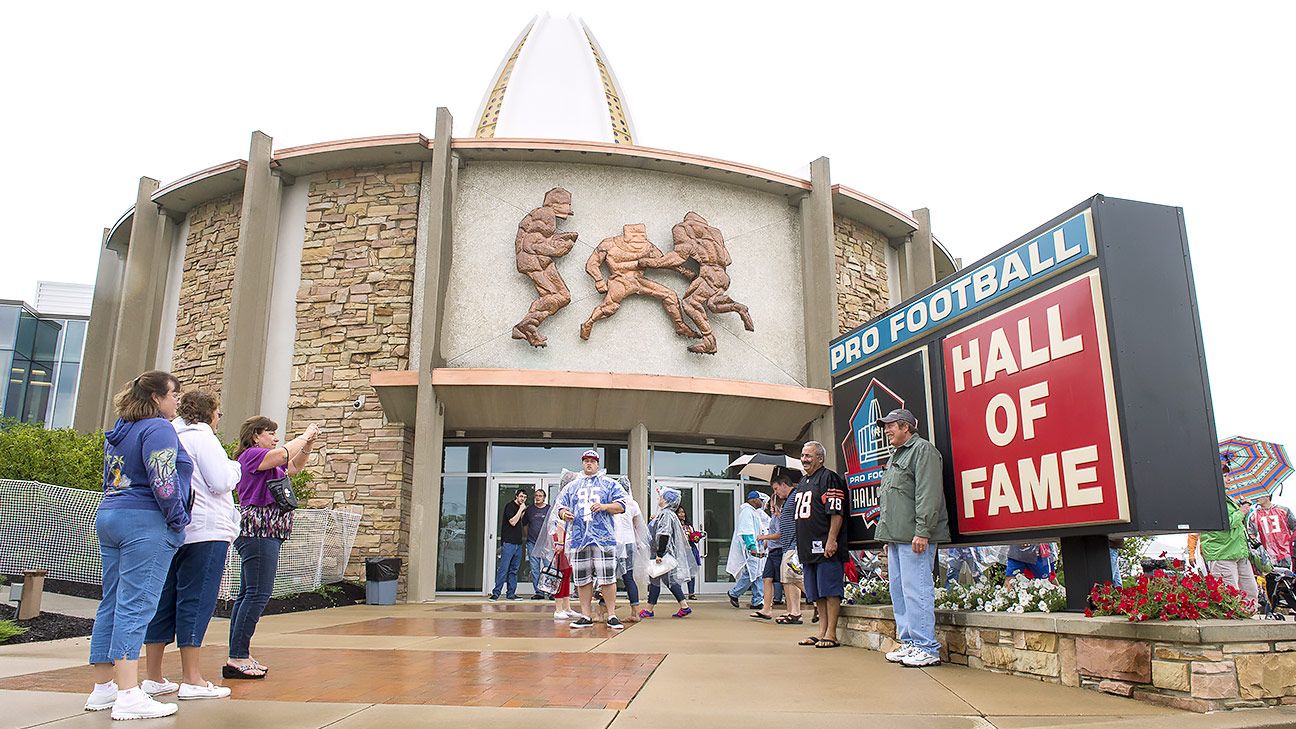
CANTON, Ohio -- John Facenda, a longtime narrator of NFL highlights whose voice became synonymous with the league, is the winner of the Pro Football Hall of Fame's 2021 Pete Rozelle Radio-Television Award.
Facenda, who died in 1984, was a television news anchor in Philadelphia when NFL Films creator Ed Sabol heard his distinct voice describing some highlights in 1965. Sabol invited Facenda to read scripts, leading to a job Facenda held for 19 years until his death at age 71.
"For nearly 20 years, John Facenda's resonant voice was, and even today still is, synonymous with the power, strength and character of the NFL," said Hall of Fame president David Baker, who made the announcement Monday.
The late John Facenda, a broadcaster and sports announcer from Philadelphia who later became known as the "Voice of God" to many fans of the @NFL, is the recipient of the 2021 Pete Rozelle Radio-Television Award.
— Pro Football Hall of Fame (@ProFootballHOF) June 28, 2021
The Hall of Fame presents the Rozelle Award annually in recognition of longtime exceptional contributions to radio and television in pro football.
Facenda narrated numerous films and weekly highlight packages, contributing to the growth in interest surrounding pro football. His speaking style earned him the nickname "The Voice of God" and contributed to the expansion of NFL Films.
Ed Sabol, the 1991 Rozelle winner, made the Hall of Fame in 2011. He died in 2015. His son, Steve Sabol, will be part of the celebration for Facenda as a member of the centennial class of 2020. He died of cancer in 2012.
Jack Facenda will accept the Rozelle Award on his dad's behalf Aug. 6 during enshrinement weekend.
Facenda's career started in radio in Philadelphia before he debuted as an anchor in 1952. Facenda was one of the creators of the TV news format still used today, with separate segments for news, sports and weather.
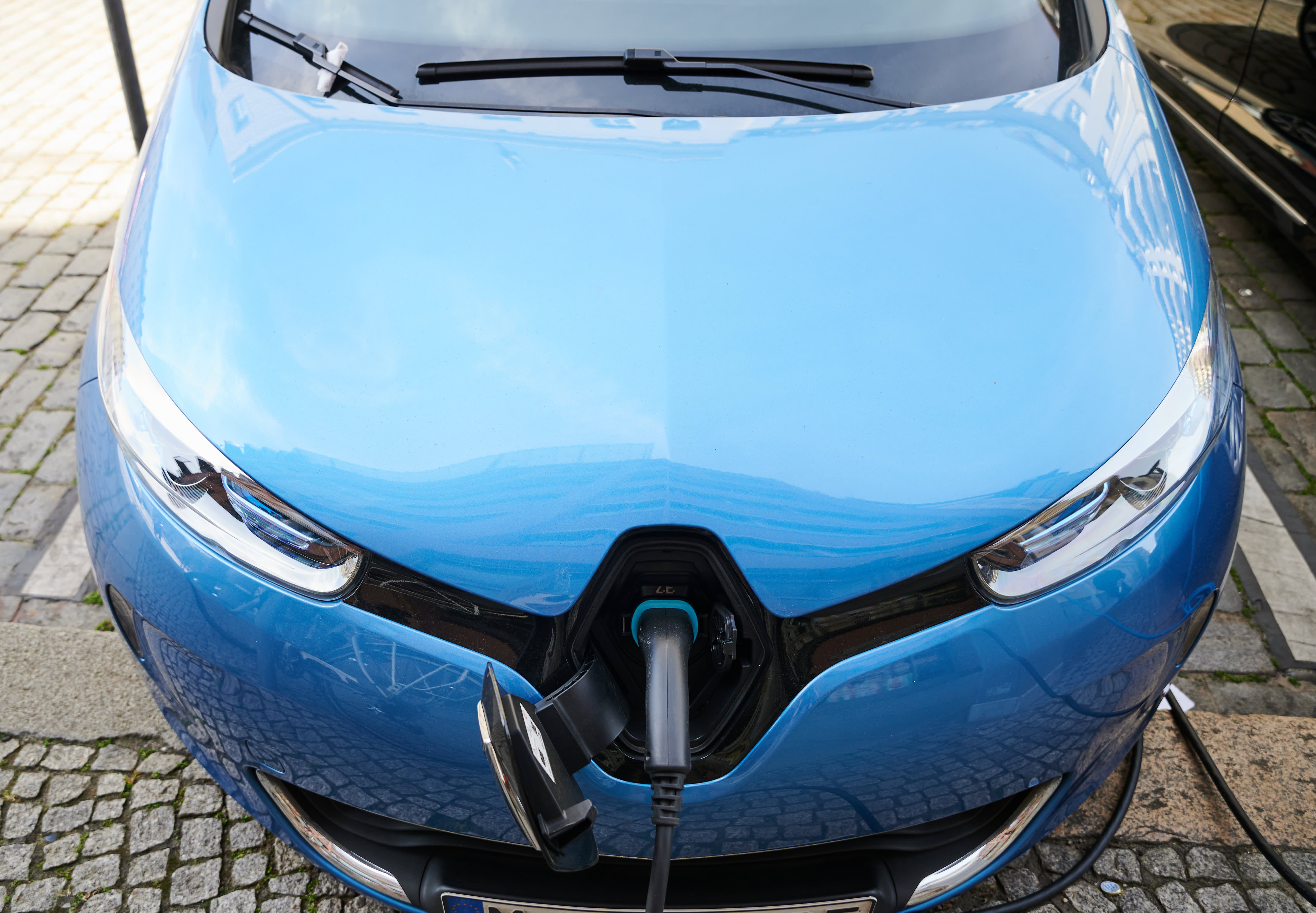
An electric car from Renault being charged in Berlin, Germany, on April 10, 2020.
Annette Riedl | picture alliance | Getty Images
Renault announced Monday it had signed "two major partnerships" related to the design and production of electric vehicle batteries, becoming the latest automotive firm attempting to get ahead of the competition in the increasingly crowded field of e-mobility.
In a statement, the French carmaker said it would partner with China's Envision AESC, which is set to develop a gigafactory in Douai, northern France. Renault said this facility would have a capacity of 9 gigawatt hours by the year 2024 and aim to grow to 24 GWh by the year 2030.
Envision AESC is part of the larger Envision Group, a self-described "greentech" firm headquartered in Shanghai. Renault said Envision AESC would invest as much as 2 billion euros ($2.38 billion) "to produce latest technology, cost-competitive, low-carbon and safe batteries for electric models."
Monday also saw Renault announce it had signed a memorandum of understanding to take a stake of more than 20% in a French firm called Verkor. Other shareholders in the company, which is based in the French city of Grenoble, include Schneider Electric, Capgemini, EIT InnoEnergy and Groupe IDEC.
In its own statement on the deal, Verkor said: "Under the partnership, the construction of Verkor's first Gigafactory will start in 2023. Initial capacity will reach 16 GWh, of which 10 GWh are for Renault Group, with a total annual capacity target of 50 GWh by 2030, of which 20 GWh will go to Renault Group."
The company added it would also push on with plans to construct a research and development facility focused on the design of "innovative battery cells and modules."
"Together with partners, we want to have a total of six cell factories up and running in Europe by 2030," Thomas Schmall, who is CEO of Volkswagen Group Components, said in a statement at the time. This move, he added, would guarantee "security of supply."
According to VW it's expected that, once fully up and running, the factories will be able to manufacture battery cells with a combined energy value of 240 gigawatt hours each year.
All of the above comes at a time when governments around the world are attempting to ramp up the number of electric vehicles on their roads in order to tackle air pollution and move away from the internal combustion engine.
The U.K., for example, has announced plans to stop selling new diesel and petrol (gasoline) cars and vans from 2030. The European Commission's "Sustainable and Smart Mobility Strategy," meanwhile, wants at least 30 million zero-emission cars on the road by 2030.
Change does seem to be on the cards. At the end of April, a report from the International Energy Agency stated roughly 3 million new electric cars were registered last year, a record amount and a 41% rise compared to 2019.
More recently on Monday, Wood Mackenzie said battery electric vehicles would become "the dominant form of road transport by 2050, accounting for 56% of all vehicle sales that year." By contrast, internal combustion engine vehicles will make up just 18% of sales, it added.
According to a report from the research and consultancy firm, there will be 875 million electric passenger vehicles on the road by the middle of this century, a figure that will be complemented by 5 million fuel cell vehicles and 70 million commercial EVs.
"Net-zero is the new mantra and road transport is one of the low-hanging fruits," Ram Chandrasekaran, who is head of road transport at Wood Mackenzie, said.
"A growing list of countries and automakers are committing to carbon neutral targets and this has completely transformed the global road transport landscape," Chandrasekaran added.
The SPAC craze has minted yet another billionaire in the latest example of blank-check companies leading to new members of the three-comma club. Santa Monica-based Beachbody—the exercise-DVD and weight-loss-shake-hawking multilevel marketing business that’s morphed into an online fitness brand—went public on the New York Stock Exchange on Monday in a merger with exercise bike maker Myx Fitness and Forest Road Acquisition Corp., a blank check company with ties to former NBA star Shaquille O’Neal and former TikTok CEO Kevin Mayer. Beachbody CEO and chairman Carl Daikeler, who founded the company in 1998, is now a billionaire thanks to his 43% stake, worth $1.7 billion as of 9:45 am ET on Monday.
The goal of the merger is to build the new company into a direct competitor to leading fitness brands such as Peloton and Lululemon—which purchased fitness device maker Mirror for $500 million in June 2020—by combining Beachbody’s fast-growing digital subscription business and library of live and on-demand workout classes with Myx’s touchscreen-equipped exercise bike, a cheaper alternative to Peloton. Myx’s exercise bike is listed at $1,299 on its website, compared to $1,895 for the lowest-priced Peloton bike package.
Myx Fitness is a relative newcomer and a small fry in the world of exercise bikes. It had just under $30,000 in revenues from selling its bikes in 2020. Beachbody, meanwhile, posted a net loss of $21 million on sales of $864 million in 2020, down from a $32 million net profit on $756 million in revenues in 2019.
“This marks an important milestone in Beachbody’s mission to help more people achieve their goals and lead healthy, fulfilling lives,” Daikeler, 57, said in a statement announcing the merger on Monday. “With this transaction, we will deploy capital to grow our platform, add connected fitness hardware through the acquisition of Myx and continue to create the most exciting and innovative in-home fitness content.”
A spokesperson for Beachbody did not respond to a request for comment on Daikeler’s net worth.
As Forbes detailed in a 2018 article, Daikeler grew up outside Philadelphia and graduated from Ithaca College with a bachelor's in corporate organizational media in 1986. He then worked as a producer for halftime shows at televised football games. In 1987, he quit to start making fitness infomercials, a business that later evolved into filmed fitness workouts in the 1990s. He cofounded workout video firm TelAmerica Media in 1994, selling 2 million copies of its hit video “Buns of Steel,” before selling his stake and moving back to the infomercial world. After two years at a phone dating service and a referral service for Lasik eye surgery, he launched Beachbody in 1998 with his coworker Jon Congdon and $500,000 from angel investors.
“What I learned was that solving my own problem—that I don't like to work out and I eat like a second-grader—was a scalable opportunity," he toldForbes in 2018, when his stake in the company was valued at an estimated $660 million.
Beachbody’s first runaway success was P90X, a three-month boot camp that's since been extolled by the likes of Michelle Obama and former U.S. Speaker of the House Paul Ryan. Daikeler and Congdon built the company into a multilevel marketing giant with more than 400,000 “coaches” selling workout videos, weight-loss shakes and other supplements on social media. In 2015, Daikeler took a risky bet by launching Beachbody on Demand, a Netflix-like service offering the company's entire library of workout videos (worth $7,000 if you purchased them all) for $99 a year. While painful in the short-term—the number of coaches shrank from 450,000 in 2016 to 340,000 in 2018—that strategy paid off in 2020, when the pandemic shut gyms across the country and people turned to live-streamed workouts and home fitness.
In early 2019, Congdon started Openfit, another live fitness class service priced at $19 a month and owned by Beachbody, which also took off in 2020 and helped grow the company’s paid digital subscriptions by 53% to 2.6 million, compared to Peloton’s 3 million. (Congdon’s roughly 6% stake in Beachbody is worth about $220 million as of 9:45 am ET). Live fitness also presents an opportunity for Beachbody to diversify beyond health foods, supplements and its Shakeology drinks, which brought in two thirds of overall revenue in 2019. The shake business, though, drew legal scrutiny a few years ago: In 2017, following an investigation by the city attorney of Santa Monica, the company reached an agreement to pay a $3.6 million settlement and agreed to stop making certain health claims about its shakes. Still, the company is investing further in the nutrition market with a celebrity-backed health food play: In December 2020, it acquired LeBron James and Arnold Schwarzenegger's sports nutrition company Ladder for $28 million.
While Beachbody’s $864 million in sales last year were an improvement on the $756 million in 2019, they represent a steep drop from the $1 billion that Beachbody told Forbes it had in 2017 revenues. Its merger with Myx Fitness allows Daikeler to hedge his bets by repositioning Beachbody as an integrated home fitness company competing with the likes of Peloton and iFIT, the parent company of NordicTrack and ProForm.
"In the same way that streaming opened up the media world, home fitness is opening up the exercise ecosystem,” says Simeon Siegel, a senior analyst at BMO Capital Markets. “There's a long runway ahead for companies that are able to offer a compelling product and compelling content.”
On the face of it, things don't look good for Lewis Hamilton's title challenge after eight rounds of the 2021 season. Red Bull has emerged with the faster car of the top two teams after winning the last four races, while Mercedes, which has not won a race since the Spanish Grand Prix in early May, is not planning to bring another major upgrade.
By contrast, Red Bull has been pushing hard with its own development, making steps with both its aerodynamic package and its Honda engine at the last two rounds. The reward was the team's most comprehensive victory of the year at its home circuit on Sunday and an 18-point lead in the drivers' championship for Max Verstappen.
Hamilton, meanwhile, had no answer for Verstappen's performance at the Styrian Grand Prix, and after stepping out of his car, said, "We need an upgrade of some sort, we need to push ... we've got to find some performance from somewhere."
Had Formula One not been forced to find ways to save money as a result of the COVID-19 pandemic, this year would have seen the introduction of a brand new set of regulations and a grid of new-look F1 cars. However, in order to save the teams from themselves during uncertain times, F1 and its governing body, the FIA, decided to delay the new rules to 2022 and effectively allow the teams to continue in 2021 with their 2020 cars.
Form a cost saving point of view, the decision to delay the new rules happily coincided with the introduction of a budget cap for 2021, meaning the spending of every team on the grid is now capped at $145 million for the year. For the top teams that has significantly reduced the amount of resources they can spend, meaning any development of this year's car is directly eating into development of the 2022 car.
In many ways, Mercedes was in the best position to deal with these changes at the start of 2020. When the season finally got underway in July, the world champions immediately had a significant performance advantage, which allowed it to switch development focus to 2021 early in the season. This was a no-brainer as the 2020 car was clearly quick enough to win the championship without a huge amount of development and, as part of the delay in the new rules, teams were forbidden to work on aerodynamic development of the all-new car for 2022.
But during the 2020 season a spanner was thrown in the works that upset Mercedes' three-year plan. Tyre supplier Pirelli was working towards a completely new type of tyre to go with the new regulations initially planned for 2021 but then delayed to 2022, and therefore had not developed the 2020 tyres. The lack of development reared its head as a potential safety issue with three failures during the 2020 British Grand Prix, and so the FIA decided to peg back the development of all teams by tweaking the aero rules for 2021.
The changes for 2021 were relatively crude in their nature, cutting a chunk out of the floor and simplifying complex aerodynamic devices around barge boards and rear brake ducts, and caused a stink during testing earlier this year when it appeared to hit the design philosophies of Mercedes and Aston Martin more than the rest of the field. All of a sudden, the wave of performance that Mercedes had hoped to ride through 2020 and 2021 came crashing down, while Red Bull and Honda made significant gains over the winter of 2020/21.
But Mercedes stuck to its original plan and turned its attention to better understanding why its 2021 car was suddenly struggling rather than work on a major upgrade package, which probably wouldn't have provided a complete fix anyway. To some extent that approach worked and Mercedes won the opening round of the season in Bahrain as well as rounds three and four in Portugal and Spain.
However, Red Bull continued to develop its 2021 car during that same period and even as Mercedes found performance, it became clear that the combination of Verstappen and the RB16-B was the quickest on the grid.
Nevertheless, under no circumstances was Mercedes willing to sacrifice the development of its 2022 project for short-term gains in 2021. Next year's car will carry the hopes of the team into a new era of Formula One, and sacrificing a head start in that new era just to win one more title in 2021 simply isn't justifiable.
"It would make no sense to put a week or two or months [of development time] back on the current car as the gains wouldn't be anywhere near of the gains you're making on the 2022 car," Mercedes team boss Toto Wolff said on Sunday.
"It is a very rational decision -- the upgrades you bring [this year] wouldn't close the aerodynamic deficit of the magnitude the aero regs for 2021 cost us, fact. And at some point Red Bull will stop aero development because it would be too dangerous to lose out on next year's championship, so the fight is still full on.
"The Red Bull Ring wasn't our best circuit in the past, it wasn't today, it doesn't mean we have no weapons in our armoury left."
What's more, F1 introduced a sliding scale of aerodynamic testing time into the regulations this year, which gives a team more development time in the wind tunnel and more time using CFD tools the lower it is down the order. Much like the draft system in American sports, it was designed to give struggling teams a helping hand and stop the biggest teams running away with it.
Mercedes only had a marginally smaller aerodynamic testing allowance than Red Bull in the first half of this year after the two teams finished 2020 first and second, but old rivals Ferrari, which finished a disappointing sixth last year, had significantly more testing time than Mercedes, making them a serious threat for 2022.
However, the sliding scale resets on June 30, meaning Mercedes and Red Bull's allowance will be reversed for the next period as Red Bull is currently leading the constructors', while Ferrari will also have slightly less now that it is fourth in this year's title fight.
Aren't Red Bull in the same position?
As Wolff pointed out, Red Bull will also have to turn its focus entirely to 2022 at some stage this year, but it seems its priorities are slightly different. Red Bull hasn't won a title since 2013 and Verstappen, who joined the team in 2016 from Toro Rosso, has never been given the shot at the title his talent clearly deserves.
As a result, it's easy to see why Red Bull would be willing to put more on the line in 2021, even if it means sacrificing 2022 to some extent. What's more, the tweaks to the 2021 rules played into Red Bull's hands over Mercedes, giving the team a rare opportunity that would be hard not to chase.
"For the first time in quite a while we've come out the blocks this year with a competitive car and we've managed to optimise that and tune it," Red Bull team principal Christian Horner said on Sunday.
"But you're at the top of the [development] curve with these cars, you're into marginal gains and obviously when you look at the new car for next year every time it goes through a development cycle it's significant steps, so it's getting that balance right between the marginal gains for this year and the big steps for next year.
"What Mercedes do is very much their business, so we're just focused on ourselves and we know that Toto likes to throw the light somewhere else, so I can't believe that they'll go through the rest of this year without putting a single component on the car.
"But as I say, what we can do is focus on our own job. Of course it is a balancing act between this year and next year, but if that means we've all got to work a bit harder than the other teams, we are fully up for it."
Verstappen added: "I don't know what's going on with other teams but I know that, of course, from our side, we do improve our car almost every race, which I think is very important -- because we have a good opportunity to have a good season.
"I'm confident with the people we have in the team that also the focus for next year is 100 percent. So, I think so far I don't see that compromise -- but of course time will tell next year if it's like that!
"I fully agree with the approach we have for this season."
Can Mercedes still fight back?
Despite Red Bull's four straight victories, the championship is still very close. Mercedes struggled at the street circuits in Monaco and Baku, but one week ago in France the two teams were incredibly close, with Red Bull winning the race on strategy rather than outright performance.
The Red Bull Ring clearly suits the Red Bull car, and the vans of upgrades that were seen arriving outside the Red Bull garage over the weekend suggest the team put extra emphasis on winning the double header at its home circuit. But the following round in Silverstone in three weeks has always been a Mercedes stronghold and engineers within the team remain quietly confident that the performance gap between the two cars will swing back in its favour for the British Grand Prix.
"This is far from over," Wolff said. "We had a very difficult weekend in Austria with no weapons in our armoury to win this race fair and straight, but we will be winning races this year and will be having pole positions and will be fighting as much as we can for every single result."
Hamilton added: "I'm not going to question the team's logic and how they got through with their process. As I said, I would love to have an upgrade, but I don't think it's in the pipeline at the moment.
"We're down on a few areas. It's been close at the beginning of the season and if we were both -- Red Bull and us -- had the same performance as we did in those first four races then perhaps it would be a little more exciting, but as I said, they've taken a decent step forwards but we will work as hard as we can to manoeuvre around it.
"But in terms of baseline performance this is what we've got. I think we did a decent job today, but we're going to keep pushing."
:format(webp):no_upscale()/cdn.vox-cdn.com/uploads/chorus_asset/file/22687780/LG_Dolby_Vision_Gaming_03a.jpeg)